
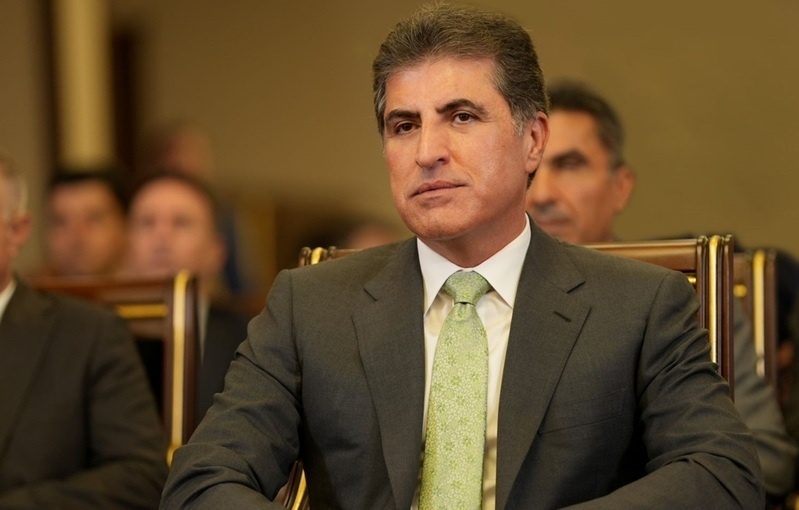
Nechirvan Barzani, the Peace Architect: A Nobel Prize Case in the Split Middle East/ Bakhtiar Sadjadi*
Story summary
Nechirvan Barzani, President of the Kurdistan Region of Iraq, is a major political figure of the Middle East who, over the past decades, has emerged as one of the rare characters of genuine consensus in a part of the world frequently defined by zero-sum struggles. In one of his speeches Nechirvan Barzani stated that “peace represents our greatest strength and the most effective path forward for the Kurds”. His life’s work thus rests on two sturdy pillars including internal development and external mediation.
The international community has taken notice. During high-level security talks, Italian Defence Minister Guido Crosetto put it plainly: “You deserve the Nobel Peace Prize.” The remark was not mere diplomatic courtesy. It showed Barzani’s ability to turn potential flashpoints into opportunities for mutual understandings that lead to peace. From helping bring the Turkish-PKK conflict toward resolution and rescuing the Yazidis under the ISIS brutal 2014 invasion to his mediation in Syria’s recent conflicts and his constructive role at the 2026 Munich Security Conference, he has built an architecture for peace that reaches across ethnic and national lines.
The Vision of a “Development Engineer”
When Nechirvan Barzani became the KRI president in 2019, it marked the high point of his international political career devoted to stewardship and renewal. He had already served three terms as Prime Minister of the Kurdistan Regional Government (2006–2009 and 2012–2018), winning from his own people the warm title “Engineer of Development”. The region he inherited was still emerging from decades of war, international sanctions and internal division — underdeveloped, impoverished and largely isolated.
Under his leadership, that picture began to change. A land once devastated by Saddam Hussein’s Anfal campaign has been transformed into a growing centre of infrastructure, education and commerce. Erbil International Airport, highways and roads linking once-remote villages, new universities, international exhibitions, and a diversified economy built around energy and trade now stand as visible monuments to his vision. Barzani has always argued that real internal stability is the necessary foundation for any meaningful external influence. As president, he has turned the same constructive energy outward, working to calm a neighbourhood still convulsed by conflict.
Harmonizing the Kurdish Political Landscape
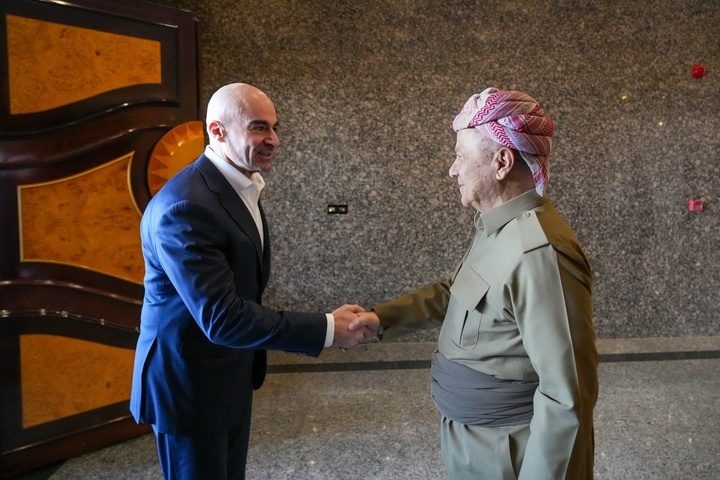
For all his international mediation efforts, Nechirvan Barzani’s most vital work has taken place within the borders of the Kurdistan Region itself. As Deputy President of the Kurdistan Democratic Party, the region’s oldest and most influential political movement, he has repeatedly risen above narrow partisan loyalties to act as an honest arbiter of Kurdish unity. The historical rivalry between the KDP and PUK has long tested the region’s politics. Barzani has become an indispensable bridge, ensuring domestic agreements could well lead to the broader aspirations of the Kurdish people.
His commitment to inclusive governance is perhaps most clearly seen in the patient drive to unify the Peshmerga forces. For years these fighters were split along partisan lines creating a serious obstacle to genuine institutional statehood. Through persistent leadership and oversight, Barzani has overseen landmark progress in 2025 and early 2026, moving steadily toward the integration of the units into a single professional national army under the Ministry of Peshmerga Affairs.
Barzani’s role as domestic peacemaker has also proved decisive during periods of electoral and constitutional impasse. Whether mediating disputes over government formation in Erbil or the allocation of federal posts in Baghdad, he has consistently placed Kurdistan zone above party interests. By nurturing a culture of consensus and rejecting the politics of exclusion, Nechirvan Barzani has demonstrated that the most enduring peace first begins at home.
Mediating the Turkish-PKK Forty-Year Conflict
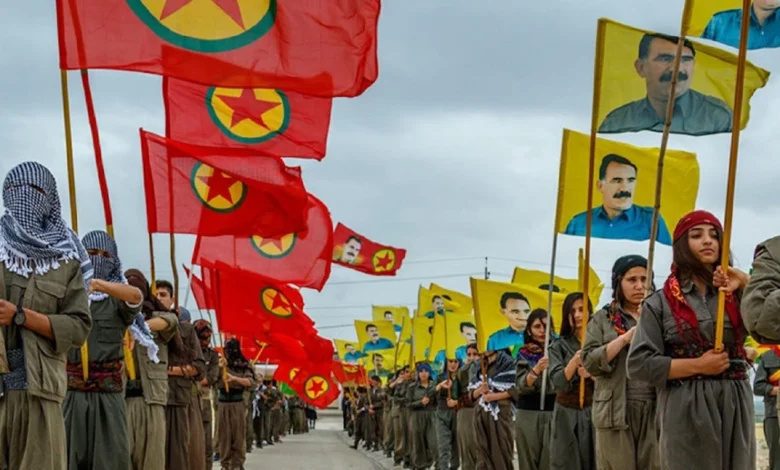
The most stubborn threat to regional stability for more than four decades has been the conflict between Turkey and the Kurdistan Workers’ Party. The insurgency claimed tens of thousands of lives and weakened relations across the Kurdish world. Nechirvan Barzani approached the challenge in his own distinctive way. Drawing on deep institutional ties with Turkish President Recep Tayyip Erdoğan and Foreign Minister Hakan Fidan, he positioned the Kurdistan Region as a trusted facilitator of dialogue. His discreet shuttle diplomacy, combined with consistent public advocacy for political solutions, helped create the conditions for the breakthrough peace process of 2024–2025.
Veteran observers took note, and referred to this successful accomplishment on several occasions. Mohammed Amin Penjwini described Barzani’s contribution as “humane and effective”, successfully bridging Ankara’s security concerns with Kurdish political aspirations. When the PKK announced its withdrawal from Turkish soil and eventual disarmament in 2025, Barzani welcomed it as “a new chapter for the entire region”. By offering neutral ground for negotiation, he showed that even the most entrenched conflicts can yield to patient, principled statesmanship.
Navigating the Sovereign Core: Erbil, Baghdad, and Tehran
Within Iraq’s complex federal system Nechirvan Barzani has consistently championed “mature federalism”. Despite ongoing disputes over oil revenues, budget shares and disputed territories, he has worked tirelessly to ensure that Erbil and Baghdad resolve their differences through constitutional means rather than confrontation. He is a well-liked figure in Baghdad’s political scene known for his efforts in bringing peace, stability, and development not only to Kurdistan Region but also to the whole country.
That pragmatic outlook extends to powerful neighbours. Having spent his formative years in Iran, Nechirvan Barzani possesses the cultural and linguistic fluency needed to practically act in Tehran. He has held close talks with the Iranian leader, Ayatollah Khamenei, on a number of occasions. By fostering dialogue along the border, he has helped stabilise a frontier long marked by friction. His ability to maintain constructive relations with both Baghdad and Tehran — while safeguarding Kurdish self-contained sovereignty — reflects a sophisticated grasp of regional power realities.
The Yazidi and A Moral Mandate
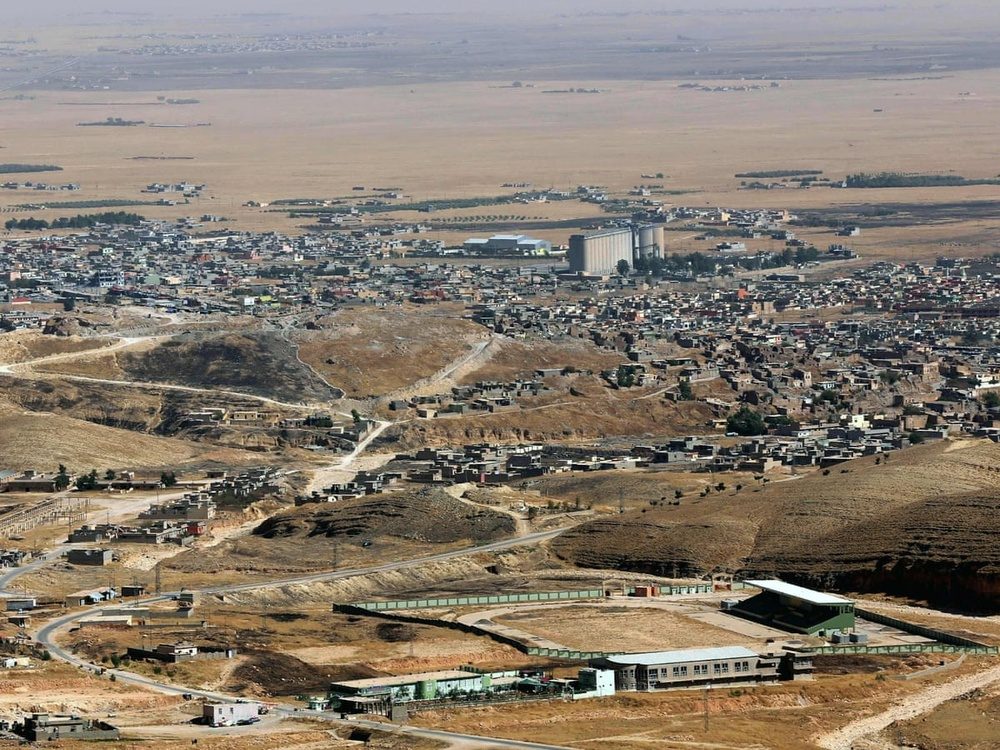
Barzani’s commitment to peace is equally rooted in direct humanitarian action. When ISIS carried out its genocide against the Yazidi community in Sinjar in 2014, then-Prime Minister Nechirvan Barzani moved swiftly while much of the international community remained paralysed. Sinjar rescue operation, directly supervised by President Masoud Barzani, was successfully conducted in 2015. Nechirvan Barzani personally oversaw helicopter missions delivering aid to those trapped on Mount Sinjar and established a dedicated Yazidi Rescue Office, helping secure the release of more than 3,500 survivors from ISIS captivity.
In an interview with the KRI media, Dr Noori Osman, the Head of Yazidi Rescue Office, referred to the significant role played by the Office in rescuing the Yazidis, and stated that “Kak Nechirvan Barzani told us to do our best in rescuing the Yazidis and to fully accomplish the mission by every possible means.” Furthermore, Yazidi official Khairi Bozani recalled the moment with stark clarity: “We called everyone, but no one came — except Nechirvan Barzani.” The effort did not end with rescue. Under his presidency the Kurdistan Region has sustained comprehensive rehabilitation programmes and international advocacy, ensuring that the victims of genocide are not forgotten amid the wider pursuit of regional stability.
Syria’s New Dawn: Post-Conflict Mediation in 2026
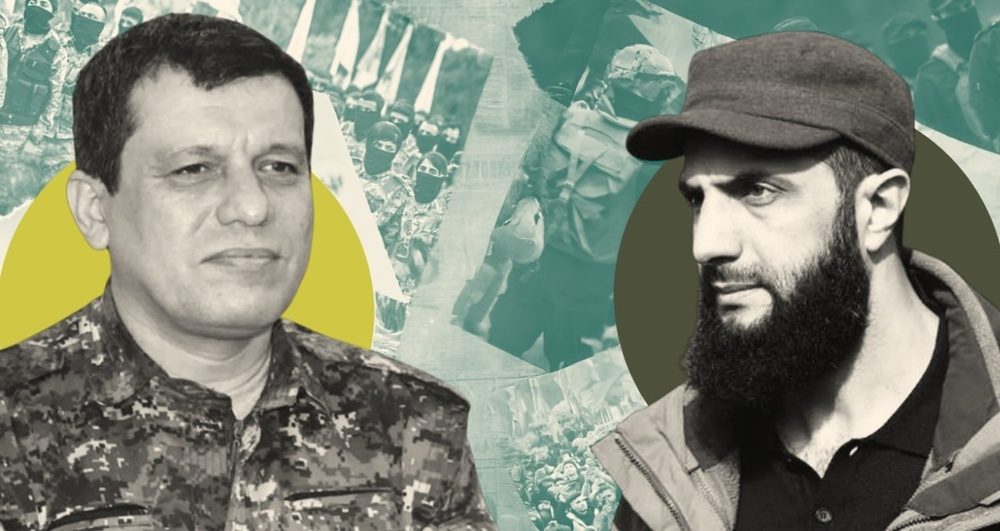
The sudden collapse of the Assad regime in Syria created fresh dangers for regional peace. Rising tensions between the new authorities under President Ahmed al-Sharaa and the Kurdish-led Syrian Democratic Forces threatened to spark yet another civil war in the northeast. Here Barzani’s relation with SDF Commander-in-Chief, Mazloum Abdi, proved decisive. Through intensive back-channel diplomacy he helped facilitate the January 2026 ceasefire agreement, which paved the way for dropping the tensions while protecting essential administrative and cultural rights for the Kurdish population.
French President Emmanuel Macron publicly commended Barzani’s efforts, noting that his insistence on “political dialogue within a unified Syria” had prevented a catastrophic escalation. It was a clear reminder of his role as a regional stabiliser — a leader who places the preservation of life and dignity above territorial or ideological rigidity.
The 2026 Munich Security Conference
From 12 to 15 February 2026, Barzani’s diplomatic skill was on full display at the 62nd Munich Security Conference. Over three intensive days he held a series of high-level meetings with global figures including French President Emmanuel Macron, U.S. Secretary of State Marco Rubio, European Commission President Ursula von der Leyen, UK National Security Adviser Jonathan Powell, and many others.
With Macron he strengthened French-Kurdish security cooperation. With Secretary Rubio he reaffirmed Erbil’s position as a “reliable anchor” in the Middle East. With President von der Leyen he emphasised the Kurdistan Region’s contribution to stability and the prevention of mass displacement. His conversations with Mazloum Abdi and Syrian officials advanced the fragile post-Assad transition and the implementation of the recent ceasefire.
A Global Trust Partnership
Beyond immediate crisis management, Nechirvan Barzani has cultivated a broad network of international trust stretching from Washington and Paris to the Persian Gulf states and East Asia. His economic diplomacy rests on a clear conviction: prosperity remains the most effective antidote to extremism. By attracting major investment from the United Arab Emirates, Qatar and South Korea, he has turned the Kurdistan Region into an important gateway for regional commerce.
If we review the major developments concerning freedom of religion and belief in KRI, we will immediately find out there has occurred a major positive change in this regard. This “Global Trust Partnership” ensures that Kurdistan is no longer an isolated enclave but a central node in the wider international order — whether through productive cooperation with China or counter-terrorism collaboration with the United States. It demonstrates how a relatively small region, when guided by forward-looking leadership, can exert influence far beyond its size on the cause of global peace.
Conclusion: The Case for Oslo
The proposition for awarding Nechirvan Barzani the Nobel Peace Prize is founded on a consistent, lifelong record of his achievements. He has not merely managed crises; he has worked systematically to dismantle the underlying mechanisms of conflict. From the twilight of the forty-year Turkish-PKK war to the blooming of a new dawn in Syria as well as the other noteworthy instances mentioned above, his influence can be observed in every significant peace initiative across the region.
In a part of the world where political stability often feels like a distant dream, Barzani has helped make it a tangible reality in that his contributions reflect the very spirit of the Nobel Peace Prize, the promotion of “fraternity between nations”. As the international community searches for models of leadership capable of navigating the complexities of the 21st century, Nechirvan Barzani offers a compelling example. Therefore, awarding him the Nobel Peace Prize would honour his past accomplishments and, more importantly, would send a powerful signal of support for the patient, inclusive and pragmatic diplomacy that the Middle East so urgently needs.
Cultural Critic and University Professor
User comments